
Publications and Resources by Doc Roc
Leader Identity & Self-Leadership
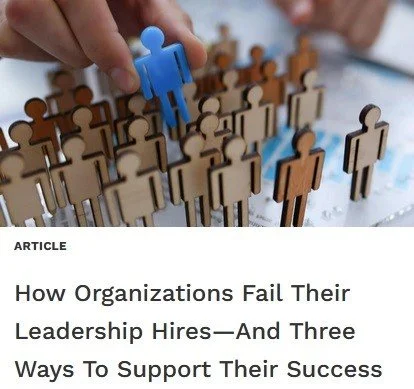
Abstract: Leadership transitions fail when organizations emphasize competency but neglect identity and cultural fit. Underrepresented leaders face added systemic barriers, making mutual alignment essential. Sustainable success requires supporting competencies, role identity, and organizational prototypicality during leadership integration.
Keywords: diversity, leadership transition, identity, prototypicality, inclusion

Abstract: Leaders can accelerate growth by building self-directed development systems grounded in experimentation, reflection, feedback, and identity work. Personal “labs” help leaders adapt when formal programs are limited.
Keywords: self-leadership, metacognition, experimentation, development

Abstract: Family systems theory shows leaders must remain emotionally connected but differentiated. Self-differentiation prevents triangulation, over-functioning, and reactivity in anxious systems.
Keywords: self-differentiation, boundaries, anxiety, systems

Abstract: Polarization demands leaders cultivate ethnorelativism—honoring difference while maintaining identity clarity. Cohesion requires grounded self-leadership and wise influence.
Keywords: polarization, intercultural sensitivity, cohesion

Abstract: Identity play enables leaders to experiment with new behaviors safely. Adaptive growth requires reframing failure as learning and expanding leadership repertoire.
Keywords: experimentation, identity play, adaptability

Abstract: Identity play enables leaders to experiment with new behaviors safely. Adaptive growth requires reframing failure as learning and expanding leadership repertoire.
Keywords: experimentation, identity play, adaptability
Adaptive & Strategic Leadership
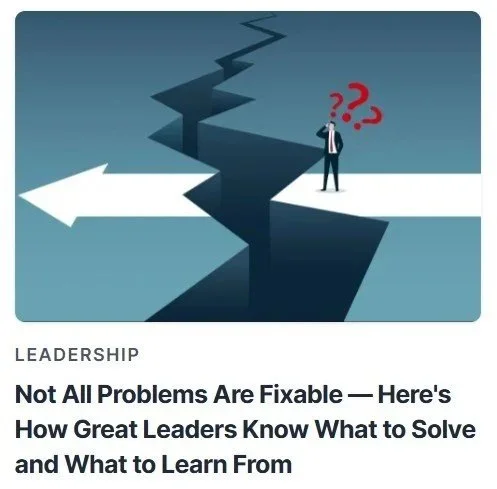
Abstract: Leaders often misdiagnose adaptive challenges as technical problems. Distinguishing these enables shared learning, deeper change, and sustainable cultural evolution.
Keywords: adaptive leadership, diagnosis, complexity, change
Abstract: Strategic leadership requires stepping back from reactive action to see systemic patterns. Balcony perspective helps leaders architect long-term positioning and alignment.
Keywords: systems thinking, strategy, balcony view

Abstract: Change succeeds when leaders engage employees in collaborative storytelling. Shared narratives foster ownership, alignment, and emotional engagement.
Keywords: storytelling, sensemaking, change leadership

Abstract: Crises create collective trauma that fractures trust. Leaders must acknowledge trauma, support healing, communicate transparently, and practice adaptive leadership.
Keywords: trauma, resilience, crisis recovery, trust

Abstract: Integrated teams are a rare organizational capability that enables agility, collaboration, and strategic coherence. Unlike siloed structures, integrated teams prioritize collective success, role flexibility, open communication, and biological metaphors of organizations as living systems. This capability strengthens resilience, innovation, and organizational performance.
Keywords: integrated teams, organizational capability, role agility, systems thinking, collaboration, competitive advantage
Organizational Identity, Culture & Innovation
Abstract: Leadership transitions fail when organizations emphasize competency but neglect identity and cultural fit. Underrepresented leaders face added systemic barriers, making mutual alignment essential. Sustainable success requires supporting competencies, role identity, and organizational prototypicality during leadership integration.
Keywords: diversity, leadership transition, identity, prototypicality, inclusion

Abstract: Innovation requires balance between execution and R&D specialization. Inclusive innovation systems allow all employees to contribute while maintaining operational discipline.
Keywords: innovation, ambidextrous organizations, culture, execution

Abstract: Organizations increasingly replace inquiry with compliance, eroding critical thinking. Cognitive apprenticeship offers a pathway to rebuild reflective capacity through modeling, scaffolding, and exploration.
Keywords: critical thinking, inquiry, apprenticeship, culture
Abstract: Change succeeds when leaders engage employees in collaborative storytelling. Shared narratives foster ownership, alignment, and emotional engagement.
Keywords: storytelling, sensemaking, change leadership
Abstract: Integrated teams are a rare organizational capability that enables agility, collaboration, and strategic coherence. Unlike siloed structures, integrated teams prioritize collective success, role flexibility, open communication, and biological metaphors of organizations as living systems. This capability strengthens resilience, innovation, and organizational performance.
Keywords: integrated teams, organizational capability, role agility, systems thinking, collaboration, competitive advantage
Abstract: Polarization demands leaders cultivate ethnorelativism—honoring difference while maintaining identity clarity. Cohesion requires grounded self-leadership and wise influence.
Keywords: polarization, intercultural sensitivity, cohesion

Abstract: Place anchors organizational identity through embodied cognition and ritual. Hybrid workplaces require intentional identity-congruent spaces to sustain belonging.
Keywords: place, belonging, hybrid work, rituals

Abstract: In an era of geopolitical and systemic disruption, organizational identity provides stability and direction. This article explains how leaders can uncover identity through documents, stakeholder accounts, crisis responses, and environmental cues. Identity functions as a strategic rudder, enabling organizations to balance adaptability with continuity during turbulence.
Keywords: organizational identity, crisis navigation, geopolitical uncertainty, 5R framework, identity claims, stability and adaptability

Abstract: Talent markets have shifted: candidates now evaluate employers based on identity, values, and social positioning. Leaders must articulate what is core, distinctive, and enduring about their organizations. Identity clarity strengthens recruitment, reduces costly turnover, and enables identity-aligned decision-making during crisis and controversy.
Keywords: values-based hiring, organizational identity, talent retention, employer alignment, culture, purpose

Abstract: Middle managers serve as organizational “translators,” bridging the strategic language of executives with the technical realities of frontline work. By code-switching across subcultures, they propagate identity, align culture with strategy, and prevent communication breakdown. Effective translation requires empathy, fluency, and whole-message communication.
Keywords: middle managers, translation, organizational identity, alignment, communication, culture propagation
Social Learning & Leadership Multiplication

Abstract: Leadership’s highest purpose is developing others. Psychological safety, mentoring, and empowerment unlock hidden potential and build sustainable organizational leadership capacity.
Keywords: mentoring, empowerment, leadership development, safety

Abstract: Cohort models integrate peer accountability, experiential learning, and identity formation, offering measurable advantages over individual-based leadership training.
Keywords: cohort learning, accountability, peer development
Abstract: Middle managers serve as organizational “translators,” bridging the strategic language of executives with the technical realities of frontline work. By code-switching across subcultures, they propagate identity, align culture with strategy, and prevent communication breakdown. Effective translation requires empathy, fluency, and whole-message communication.
Keywords: middle managers, translation, organizational identity, alignment, communication, culture propagation

Abstract: Rapid technological and economic disruption requires leaders to future-proof not only strategy but people. This article outlines workforce resilience practices including continuous learning, adaptability, psychological safety, leadership development, and human-centered change systems. Investing in people is the organization’s most sustainable competitive advantage.
Keywords: future-proofing, workforce resilience, learning culture, adaptability, people strategy, disruption
Emotional Intelligence, Wellness & Responsiveness

Abstract: Leadership development aligns with how the brain learns socially. Mirror neurons, feedback loops, and communal identity formation make cohort learning more transformative than static training models.
Keywords: neuroscience, cohorts, social learning, leadership identity

Abstract: Expressive arts strengthen emotional processing, team cohesion, and innovation. Leaders modeling creative vulnerability build resilience and trust.
Keywords: creativity, expressive arts, wellness, cohesion
Abstract: Family systems theory shows leaders must remain emotionally connected but differentiated. Self-differentiation prevents triangulation, over-functioning, and reactivity in anxious systems.
Keywords: self-differentiation, boundaries, anxiety, systems

Abstract: Reactive leadership erodes trust. Responsive leaders slow down inference, practice empathy, and cultivate psychological safety, improving decision quality and cohesion.
Keywords: emotional intelligence, empathy, trust, responsiveness
Abstract: Crises create collective trauma that fractures trust. Leaders must acknowledge trauma, support healing, communicate transparently, and practice adaptive leadership.
Keywords: trauma, resilience, crisis recovery, trust

Abstract: Most leadership breakdowns stem not from style but from emotional fusion. Drawing on Friedman and Bowen family systems theory, this article argues that self-differentiation—staying connected without being emotionally absorbed—is the core leadership capacity. Leaders must resist triangulation, over-functioning, and anxiety-driven consensus traps.
Keywords: self-differentiation, emotional fusion, boundaries, leadership anxiety, triangulation, non-anxious presence

Abstract: The holidays can intensify grief for employees experiencing loss. This article offers practical strategies for leaders to provide support through empathy, flexibility, inclusive celebration practices, and psychological safety. Organizations that acknowledge grief strengthen trust, retention, and humane culture during emotionally complex seasons.
Keywords: grief support, employee wellbeing, holidays, empathy, workplace compassion, psychological safety
Strategic Identity & Organizational Renewal (Academic Papers)
Abstract: This conceptual paper introduces a Leadership Transition Assessment Framework integrating three dimensions of leader fit: competencies, role identity, and authentic prototypicality. The model offers a holistic approach to leadership selection and development, supporting both aspiring leaders and talent professionals in improving transition outcomes and long-term organizational alignment.
Keywords: leadership transitions, role identity, prototypicality, competency development, leader fit, identity work
Abstract: This peer-reviewed conceptual paper integrates RBV, VRIO, and the 5R identity model to create a Strategic Identity Management Framework. It equips middle managers to evaluate identity claims as competitive resources and align identity work with sustainable advantage.
Keywords: strategy, RBV, VRIO, organizational identity, framework
Abstract: Identity is a rare strategic resource. Integrating VRIO and the 5R model, Rockwell introduces the Strategic Identity Management Framework to assess and optimize identity claims for sustained advantage.
Keywords: VRIO, RBV, identity strategy, competitive advantage

Abstract: Decline accelerates through negative sensemaking and self-fulfilling prophecies. Identity renegotiation via the 5R model provides a pathway toward renewal.
Keywords: sensemaking, identity threat, decline, turnaround
Abstract: During decline, organizations lose coherence. The 5R identity processes help leaders reclaim, reaffirm, regenerate, retire, or reimagine traits to enable turnaround.
Keywords: decline, turnaround, identity renewal, 5R model

Abstract: This paper formalizes identity work as central to avoiding organizational death. Identity elasticity and alignment effort shape whether organizations spiral downward or renew.
Keywords: identity elasticity, decline, recovery
